
Technique and Patience in a Long Endgame
Nihal Sarin – Vidit Gujrathi, Tata Steel Chess India 2026
This game is a model example of how small advantages, good piece coordination, and king activity can slowly turn into a winning endgame. White never rushes. Instead, he improves his position step by step, exchanges at the right moments, and finally wins through superior technique.
Opening: Quiet Development and Flexibility
The game starts with 1.d4 Nf6 2.Nf3 d5 3.c4 e6, leading to a Queen’s Gambit–style position. With 4.g3, White chooses a fianchetto setup, aiming for long-term pressure rather than early confrontation. After 4…Be7 5.Bg2 O-O 6.O-O, both sides complete kingside development.
Black supports the center with 6…c6, preparing a solid structure. White responds with 7.Nbd2, keeping options open. After 7…b6 8.b3 Bb7 9.Bb2, both bishops are developed to strong diagonals. Black continues with 9…Nbd7, and White centralizes the queen with 10.Qc2. Black places a rook on the c-file with 10…Rc8, and after 11.Rad1, White fully connects the rooks.
The move 11…c5 challenges the center directly.
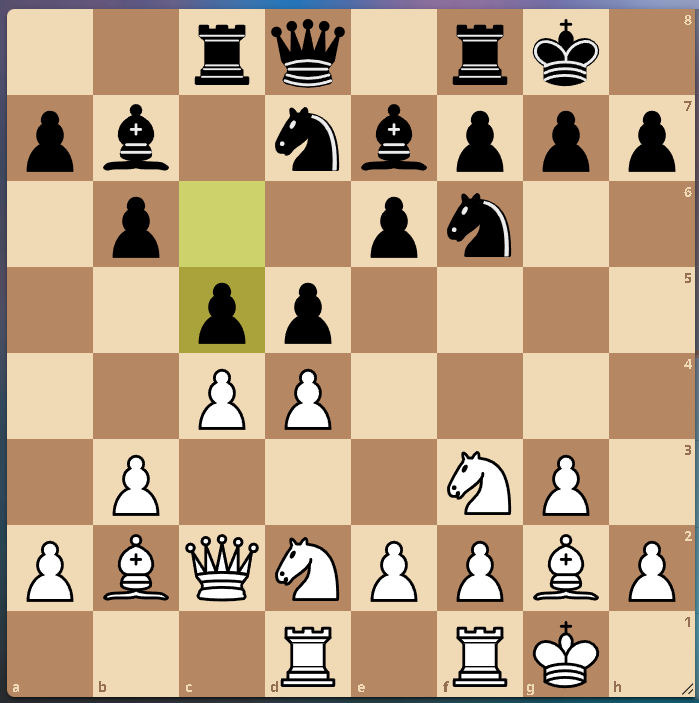
Figure 1 – After 11…c5
Central Tension and Early Exchanges
White sidesteps pressure with 12.Qb1, keeping the queen safe. Black captures in the center with 12…dxc4, and White recaptures actively using 13.Nxc4. Black tries to gain activity with 13…Be4, attacking the queen, but 14.Qa1 calmly steps away.
After 14…Qc7, White opens the position with 15.dxc5. Black recaptures with 15…Bxc5, and now White brings a knight forward with 16.Nfe5, aiming at central and kingside squares. Black exchanges bishops with 16…Bxg2 17.Kxg2, slightly improving White’s king activity for the future.
Black then removes the advanced knight with 17…Nxe5, but 18.Bxe5 keeps White’s pieces active. The check 18…Qb7+ forces 19.f3, a modest move that solidifies the center. Black retreats the knight with 19…Ne8.
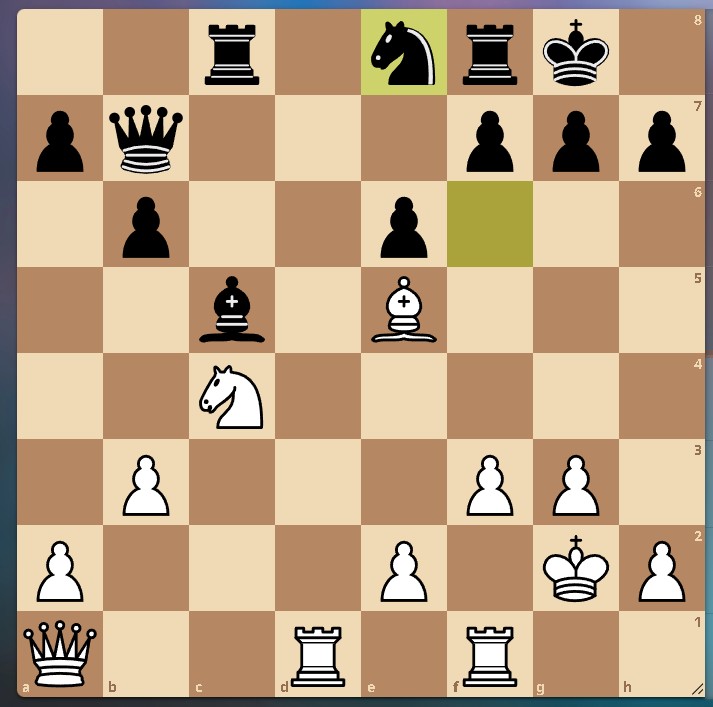
Figure 2 – After 19…Ne8
Improving the Position
White centralizes a bishop with 20.Bd4, eyeing important squares. Black gains queenside space with 20…b5, but White responds precisely with 21.Bxc5, exchanging an active piece. After 21…Rxc5, White jumps into the center with 22.Ne5, increasing pressure.
Black develops with 22…Nf6, and White brings a rook to the c-file with 23.Rc1. Black doubles rooks using 23…Rfc8. White now simplifies the position with 24.Rxc5 Rxc5 25.Rc1, forcing further exchanges. After 25…Qc7 26.Rxc5 Qxc5, many pieces are gone, and a clear endgame appears.
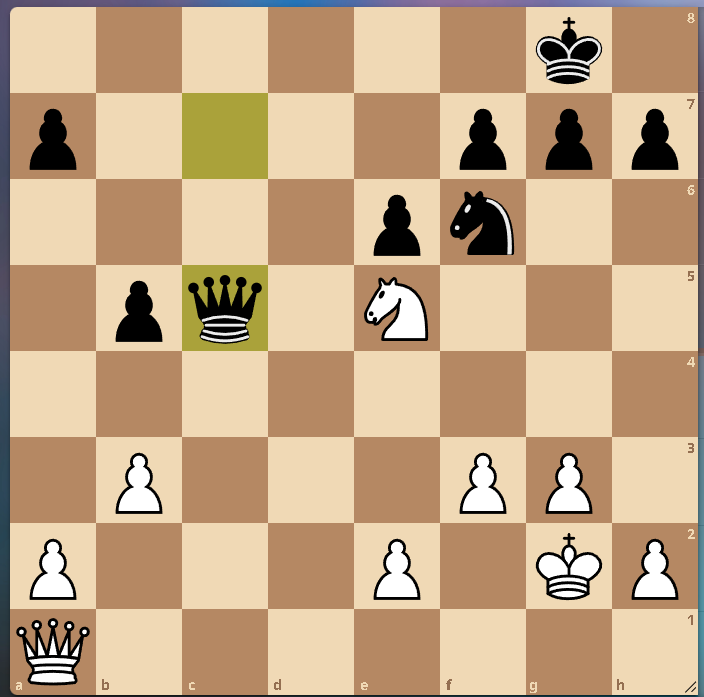
Figure 3 – After 26…Qxc5
Transition to the Endgame
White improves knight coordination with 27.Nd3, attacking the queen. Black responds with 27…Qc2, but White centralizes the queen with 28.Qe5. After 28…Nd7, White plays 29.Nb4, threatening to simplify further. Black exchanges with 29…Nxe5, but 30.Nxc2 leaves White with better minor pieces.
After 30…Nc6, White activates the king with 31.Kf2 and 32.Ke3, a key endgame principle. Black also brings the king forward with 31…Kf8 32…a6. White continues improving pieces with 33.Nd4, while Black checks with 33…Nb4 and 34…Nd5+. White calmly steps forward with 35.Ke4.
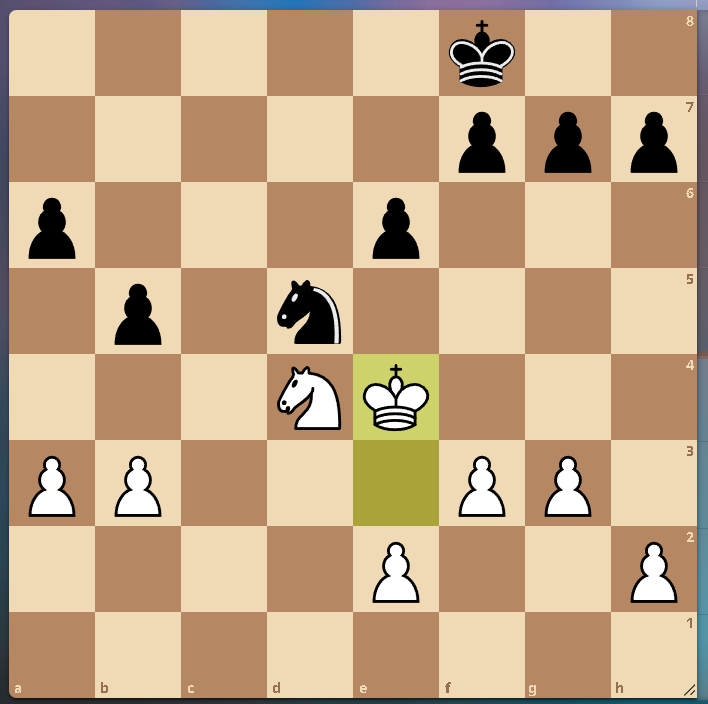
Figure 4 – After 35.Ke4
King Activity Decides
After 35…Ke7, White forces progress with 36.Nf5+, improving the knight and gaining tempo. The kings continue marching: 36…Kf6 37.Kd4. Black seeks counterplay with 37…b4, but 38.axb4 Nxb4 only opens lines for White’s pieces. With 39.Ne3, White keeps full control.
The white king keeps advancing: 40.Kc4 41.Kc5, pushing Black back. After 41…Kd7 42.Nc4, White dominates key squares. Black tries to hold with 42…f6, but White calmly prepares a pawn breakthrough with 43.f4. After 43…h6 44.e4, White gains more space.
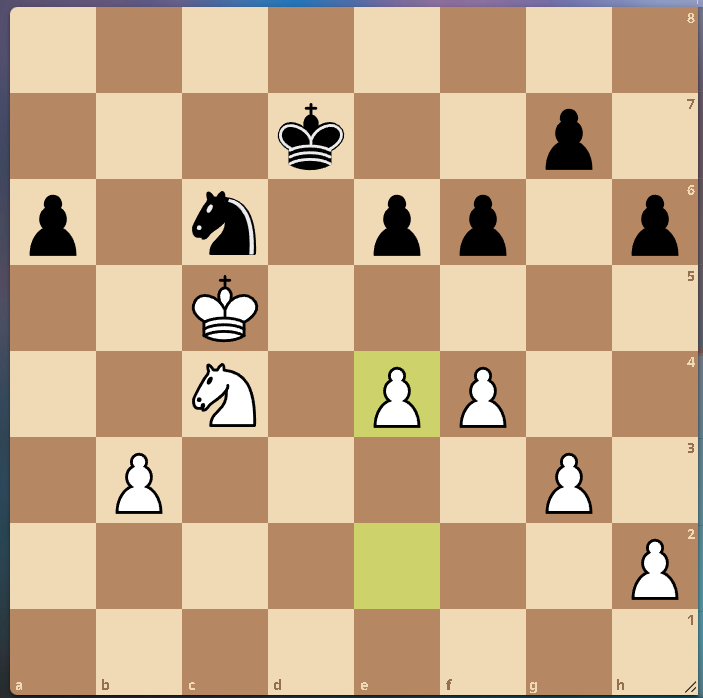
Figure 5 – After 44.e4
Breaking Through
Black tries to complicate matters with 44…g5, but White pushes forward with 45.f5. After 45…Na7, the knight is driven away. White jumps in with 46.Nd6, creating threats. The exchange 46…exf5 47.exf5 opens files and fixes Black’s pawns.
After 47…Nc6, White improves again with 48.Ne4. Black responds with 48…Ne5, but White finds a tactical idea with 49.Nxf6+, forcing the king to move. After 49…Ke7 50.Ng8+ Kf7 51.Nxh6+, White wins material and reaches a clearly winning position.
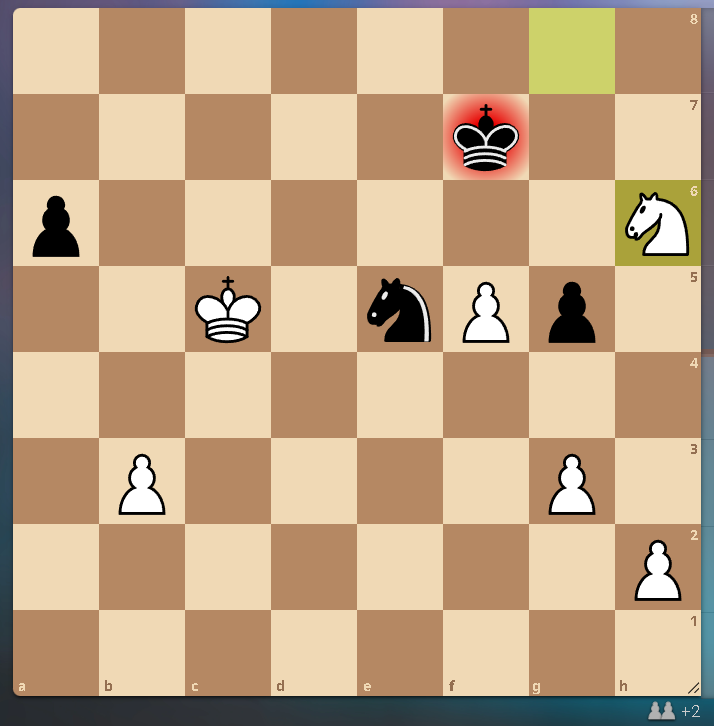
Figure 6 – After 51.Nxh6+
Conversion and Resignation
White centralizes the king again with 52.Kd5 and 53.Kd4, taking away Black’s counterplay. After 53…Nf2 54.b4, White fixes the queenside. Black’s checks with 55…Nd1+ do not change the outcome. White calmly steps forward with 56.Kd2 57.Ke2.
The knights keep improving: 57…Ne4 58.Ng4 Nd6 59.Ne3. With 60.Kd3, White’s king dominates the center. Black tries one last regrouping with 60…Nb5, but 61.g4 and 62.Nc4+ keep everything under control.
White calmly limits the knight with 63.h3 and 64.Nd2, then delivers the final blow with 65.Nf3+. After 65…Kf4 66.Nd4 Kg3, the passed pawn advance 67.f6 decides the game. Black resigned, as the pawn cannot be stopped.
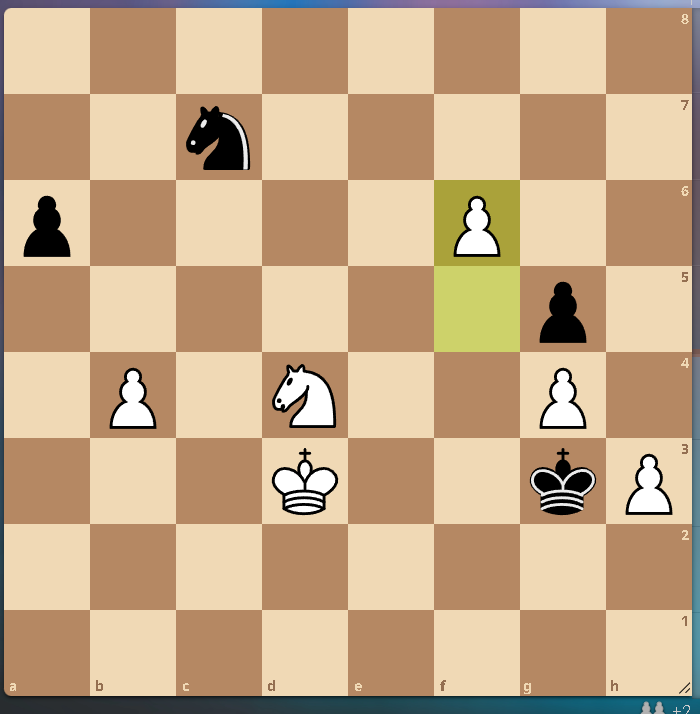
Figure 7 – Final Position (after 67.f6)
Key Lessons
- Quiet openings can lead to powerful endgames
- Piece coordination matters more than speed
- King activity is the most important endgame factor
- Small advantages must be improved patiently
- Passed pawns decide long games
Vidit resigned, as the b-pawn is unstoppable after the exchange. A classic lesson in converting small advantages!